What Is Artificial Intelligence? Definition and Examples
Learn what artificial intelligence is, how it works, its main types, key milestones, everyday applications, benefits, and limitations.
Blog
Writing on AI, marketing data, and the work behind it. For people who have to make the call, not to chase keywords.
0112 articles
View category →Start with what artificial intelligence means, how a model turns input into output, and where machine learning and deep learning fit. This cluster builds the vocabulary needed before exploring generative AI, agents, and analytics applications.
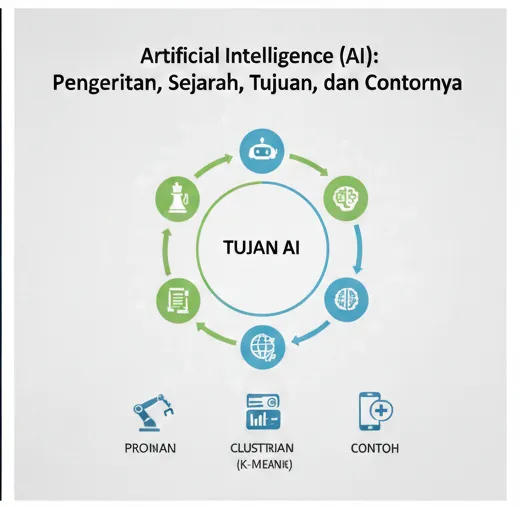
Learn what artificial intelligence is, how it works, its main types, key milestones, everyday applications, benefits, and limitations.
Agentic AI can plan and take actions towards a goal. Learn how it works, what components it needs, and how it differs from traditional AI.
Generative AI creates text, images, audio, video, and code from learned patterns. Learn how it works, where it is used, and what can go wrong.
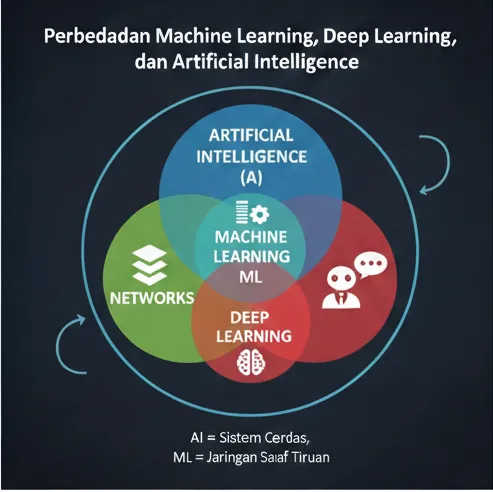
Compare AI, machine learning, and deep learning by scope, methods, data requirements, computing needs, and practical use cases.
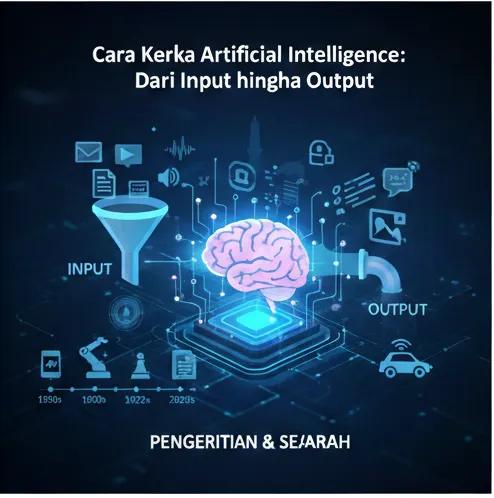
Understand how AI works through data preparation, model training, inference, and output, with clear examples and practical limitations.
024 articles
View category →Explore how generative models produce responses, retrieve external context, and still fail. The focus is technical enough to be useful without turning into model-development documentation.
Learn how generative AI and LLMs use tokens, context windows, Transformers, retrieval, RAG, and evaluation to produce and assess outputs in practice.
Learn what a large language model is, how an LLM works at a practical level, what it can do, and which limitations businesses need to understand.
Learn what retrieval-augmented generation is, how a RAG pipeline works, when it helps, and which risks still require evaluation.
Understand why LLMs hallucinate, how factual and groundedness failures differ, and which controls can reduce and evaluate the risk.
034 articles
View category →AI agents do more than generate text. This cluster explains how models use tools, retain context, complete steps, and operate within limits that people can inspect and control.
Learn how models, tools, memory, workflows, permissions, guardrails, human oversight, and evaluation together form a practical AI agent system.
Learn how AI agent guardrails constrain capabilities, permissions, autonomy, data, execution, impact, and recovery when controls fail.
Compare AI agents and chatbots across goals, tools, autonomy, memory, actions, risks, and the business situations suited to each.
Understand human-in-the-loop for AI agents: approvals, escalation, review, approval fatigue, risk tiers, and effective oversight design.
044 articles
View category →This cluster examines how AI connects data, detects changes, and builds analytical context. The emphasis is not automation promises, but decision material that remains open to verification.
Learn how AI can connect marketing data, detect changes, build insights, and prepare evidence that supports accountable marketing decisions.
Learn how AI connects GA4, Search Console, and Google Ads without conflating each platform's metrics, attribution, or analytical role.
Learn how AI detects marketing data anomalies, builds baselines, reduces false alerts, and turns unusual signals into investigations.
Prepare marketing data for AI through clear objectives, metric definitions, tracking, data quality, access, privacy, and validation.
0522 articles
View category →Search visibility begins before a click occurs. This cluster explains how bots discover pages, search engines build indexes, algorithms select results, and AI systems compose answers and cite sources.
SEO helps search engines understand a website and connect it with relevant searches. Learn how it works, what it supports, and why it matters.
Learn how to evaluate AI-platform referral traffic through sources, landing pages, engagement, and conversions without confusing visits with citations.
Learn how Search Console and GA4 form one measurement journey, connecting impressions and clicks with engagement, conversions, and business outcomes.
Find pages losing organic traffic with Search Console and Analytics, then separate changes in demand, rankings, CTR, and measurement.
Rising impressions and falling clicks mean search exposure is growing while visits weaken. Learn what causes the pattern and how to interpret it.
064 articles
View category →This cluster treats the website as an information asset and business environment that people, search engines, and AI systems need to understand. It focuses on principles, structure, and decision impact rather than coding tutorials or website-building services.
Learn what a website is, how it works, its business functions, and how clear information effectively connects people, search engines, and AI systems.
Learn how a business website provides authoritative information, reduces uncertainty, and creates a controlled path towards meaningful conversion.
Understand how search engines and AI systems access, process, and use website information without relying on exaggerated optimisation claims.
A modern website standard covers mobile experience, performance, security, accessibility, clear information, and sustainable maintenance.
074 articles
View category →This cluster explains how to investigate changes in cost and conversions before taking action. It separates tracking, campaign, landing-page, attribution, and platform causes.
Learn how to analyse Google Ads performance and diagnose changes in cost, traffic, conversions, and business value before making optimisations.
Audit Google Ads conversion tracking across goal definitions, tags, counting, attribution, consent, and reconciliation with CRM data.
Diagnose a higher Google Ads CPA across tracking, cost, conversion rate, traffic, landing pages, and lead quality before changing bids.
Diagnose high Google Ads clicks but low conversions across tracking, search intent, traffic, landing pages, offers, and lead quality.
084 articles
View category →Data does not automatically become a decision. This cluster separates findings, insights, and recommendations, then explains how to prioritise and test them while final control stays with people.
Learn a practical marketing decision framework connecting evidence and insights with priorities, accountable action, experiments, and evaluation.
Learn how to turn a marketing finding into a specific, testable hypothesis that can support a real decision.
Learn how to connect a marketing hypothesis with controls, metrics, guardrails, and a business decision.
Learn how to separate symptoms, triggers, and contributing causes before deciding how to address a digital marketing problem.