What Is Agentic AI?
Agentic AI is an artificial intelligence system designed to plan, choose actions, use tools, and adjust its approach in pursuit of a goal. Instead of returning only one prediction or generated response, it can manage a sequence of steps and evaluate what happened along the way.
The amount of autonomy varies. Some systems merely suggest the next action for a person to approve. Others can call software tools, search for information, update a record, or trigger a workflow within defined permissions.
Google Cloud defines agentic AI around goal-oriented decision-making and action, including perception, reasoning, planning, execution, and learning. The practical distinction is not whether an interface calls itself an agent, but whether the system can pursue an objective across multiple steps.
- Agentic AI can plan and act, not only generate an answer.
- It requires tools, state, permissions, and orchestration in addition to a model.
- Autonomy should be limited according to the cost and reversibility of an error.
- An AI agent is an implementation; agentic AI describes the broader capability or approach.
The Core Components of Agentic AI
Agentic behaviour comes from a system, not from a language model alone. Common components include:
Goal and instructions
The system needs a defined objective, constraints, completion criteria, and rules for when it should stop or ask for help.
Model and reasoning process
A model interprets the situation, proposes a plan, selects an action, and evaluates results. The apparent reasoning may be implemented in different ways and does not imply human understanding.
Tools and permissions
Tools let the system search, retrieve records, run code, send requests, or update another application. Permissions determine which actions are allowed and what data can be accessed.
State and memory
State tracks progress within the current task. Longer-term memory may preserve preferences or earlier information, but it also introduces privacy and data quality concerns.
Orchestration and guardrails
Orchestration controls the sequence of steps, retries, hand-offs, and failure handling. Guardrails restrict unsafe actions, while approval checkpoints keep accountable people involved.
How Does Agentic AI Work?
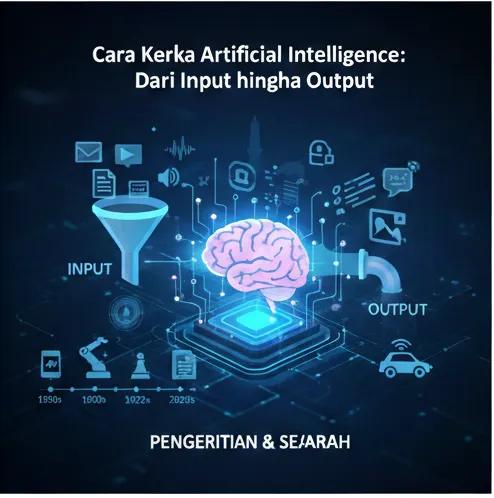
A simplified agentic workflow looks like this:
- Receive a goal. The user or application defines the desired outcome.
- Gather context. The system reads available data, instructions, and current state.
- Create or update a plan. It breaks the goal into smaller actions.
- Use a tool. The agent searches, calculates, retrieves, writes, or calls another service.
- Observe the result. It checks whether the action worked and what changed.
- Continue, revise, or stop. The system takes another step, requests approval, or returns the outcome.
This loop is what makes the system agentic. A single generated reply may support the loop, but generation alone does not create an agent.
Agentic AI vs Traditional and Generative AI
| Aspect | Traditional AI | Generative AI | Agentic AI |
|---|---|---|---|
| Primary role | Classify, predict, or recommend | Create content | Pursue a goal through actions |
| Typical interaction | Input followed by output | Prompt followed by generated output | Goal followed by a multi-step loop |
| Tool use | Controlled by the application | Optional | Usually central to the workflow |
| State | Often limited to one operation | May retain conversation context | Tracks progress and action results |
| Autonomy | Low | Usually low | Ranges from assisted to more autonomous |
The categories can overlap. An agentic system may use generative AI to interpret instructions and write responses, predictive models to score options, and conventional software to carry out actions.
Agentic AI vs an AI Agent
Agentic AI describes a capability or design approach; an AI agent is a particular software implementation. One system may contain a single agent, several specialised agents, or an agentic workflow without presenting any component as a named agent.
The distinction matters because adding a chatbot label or a tool button does not automatically make a product agentic. The system must be able to manage actions and progress towards an objective.
Practical Examples
Possible applications include:
- A support agent that categorises a request, retrieves account context, drafts a response, and escalates exceptions.
- A coding agent that inspects a repository, edits files, runs tests, and revises its work after failures.
- A research agent that decomposes a question, searches multiple sources, compares evidence, and produces a cited report.
- An operations agent that monitors a queue, identifies an anomaly, proposes a response, and waits for approval before execution.
- A marketing analysis agent that checks several data sources, identifies a change, tests possible causes, and prepares findings for human review.
These examples become higher risk when the system can spend money, communicate externally, delete data, or change production systems.
Benefits, Risks, and Appropriate Use
Agentic AI is most useful when a task has multiple repeatable steps, clear tool boundaries, and observable results. It can reduce coordination work, keep context across a workflow, and respond to intermediate results.
The main risks are broader than factual error:
- A mistaken plan can create several incorrect actions.
- Excessive permissions can magnify the impact of a failure.
- Tool output may contain malicious or misleading instructions.
- Repeated loops can consume time, money, or computing resources.
- It may be unclear who is accountable for an automated decision.
Controls should match the consequences. Read-only access, spending limits, approval gates, audit logs, isolated environments, and reversible actions are practical safeguards.
For the way these components form one operating system, continue to AI agent architecture.
Frequently Asked Questions
Is agentic AI the same as a chatbot?
No. A chatbot may only generate replies. Agentic AI can plan and use tools to complete a sequence of actions. The guide to AI agents versus chatbots compares them at the system level.
Does agentic AI always use an LLM?
No, although many current systems use LLMs for language and planning. Rules, predictive models, search, and conventional software can also participate.
Is agentic AI still narrow AI?
Yes. Current agentic systems remain narrow AI because they operate within designed capabilities and permissions.
Can agentic AI work without human supervision?
It can perform some tasks autonomously, but the appropriate level of supervision depends on risk. High-impact or irreversible actions should retain meaningful human control.
What is the main risk of agentic AI?
An error can propagate through several actions. Poor permissions, weak monitoring, and unclear stopping conditions can turn a small mistake into a larger incident.
Conclusion
Agentic AI combines models, tools, state, and controls so a system can pursue a goal across multiple steps. Its value lies in managing a workflow rather than merely producing a response.
The safest implementations start with bounded tasks, limited permissions, observable outcomes, and human approval wherever an action is costly or difficult to reverse.